
Vibration Deburring
Vibration deburring is used to remove sharp edges, burrs, and irregularities created during processes such as laser cutting, punching, or other machining operations. The result is components that are safe to handle and have a smooth, controlled surface ready for further processing, assembly, or surface treatment.
Deburring Processes
Our Approach
Vibration deburring is an integrated part of our production flow and is adapted to the component’s size, geometry, and surface requirements. We use controlled mechanical methods to ensure consistent results and reduce the need for manual finishing.
The choice of method is always based on the desired end result and the component’s intended application.
What You Get
Surface Quality & Process Optimization
Components with rounded edges and smooth surfaces ready for assembly or surface treatment
Reduced risk of handling injuries and easier component handling
A consistent finish that improves adhesion and durability in subsequent processes
An optimized production flow with fewer errors and less manual grinding
Technical Description
Deburring Tailored to Component Size and Requirements
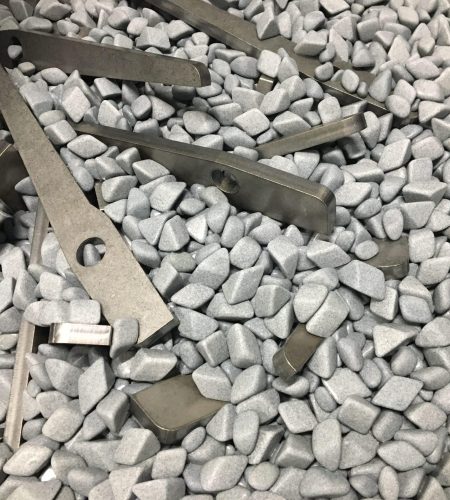
Deburring is performed through mechanical processing where burrs and sharp edges are removed.
Vibratory Deburring
A more aggressive finishing method where components are processed through mechanical vibration together with abrasive media.
The method polishes and smooths sharp edges and is suitable for medium-sized components. The choice of deburring media depends on the desired grinding effect and final surface finish.
Tumbling
A process used for smaller metal components, where parts are placed in a rotating drum. The components move and interact with each other, effectively removing burrs and irregularities.
Both methods ensure a controlled and consistent surface finish, reducing variation in production.
The chosen method is always based on the desired end result and the component’s intended application.
Applications
Deburring is typically used for:
Sheet metal components after laser cutting or punching
Components intended for assembly or surface treatment
Products requiring safe handling and a high-quality finish
This Process Can Be Combined With


Results from our customers
Illuminated Silhouettes for Brønderslev Municipality
Mermaid Whistles (Havfruefløjterne), Fredericia Municipality
Our Expertise, Your Savings
Warehouse Solution Integrated with Demand Forecasts
Framework Agreement for Mutual Benefit
Customer-Specific Kit Packaging
From Design to End Customer
Second Source for Turret Punching
Significant Cost Savings Through the Right Manufacturing Technology
One Piece Flow Ensures Fast Delivery
Technology Insights & Flexible Manufacturing Capacity
Flexibility & Fast Delivery
Tube Laser Cutting Capacity During Peak Season
FAQ – Vibration Deburring
Frequently Asked Questions
If you cannot find the information you are looking for, please do not hesitate to contact us. Our specialists are ready to assist you.
When is deburring necessary?
Deburring is necessary when the function of the product does not allow for a burr to be present.
Which components are suitable for vibration deburring?
Sheet metal components between 40 mm and 300 mm are best suited for vibration deburring.
When is barrel deburring suitable?
Barrel deburring is a more aggressive form of deburring and requires a larger batch of smaller components.
Let’s Start the Conversation
Start Your Next Project With Us
Contact us today for a quote or technical consultation — we’re ready to elevate your production.